To the Super-Heroes at the Grocery Store

To Anyone with a visible physical disability my family may have run across in the last six months:

I need to tell you I am sorry. It isn’t that I am attempting to raise a rude child. It is simply that I am attempting to raise a curious and insightful child who just happens to be generally exuberant and very, very loud. We are currently in the narration stage of life. It is hilarious, insightful, and often embarrassing. Like when Juliet started  referring to ample cleavage as “you butt in you chest” or started staking out clear lines between mommys and grandmas and some lovely ladies at the grocery store disagreed about which side of the line they fell on. “No, she a GRANDMA!”

Recently, my lovely three-year-old has been noticing the different ways in which people get around. While she is okay with the walking we do at our house , she is truly fascinated by anyone who uses crutches, a wheelchair, or any other device to get from here to there. You see, Juliet has been watching a lot of Marvel comics with her dad.  She has seen people who don’t just walk. Those are the people who save the world.

So when a lovely women walks into Target and her gait is perfectly timed not just with her feet but also with the crutches attached to her arm, my lovely girl notices. Loudly.

“Mom! look at that lady! She walking with her ARMS! She got more legs! She a SPIDER LADY! Mom! Did you see the SPIDER LADY!”

It doesn’t matter how quickly I start telling her that isn’t it neat that all kinds of people walk in all different ways. Even if I incessantly shush her, she will not be deterred. She saw the coolest thing there is to see all day, and she is darned if I am going to miss it.

And when I take a moment to think about it. Isn’t she right? It is super cool that my friend at work can get anywhere I can with purely the power in her arms. It is amazing that the lady at the Target can manage to co-ordinate her arms and her legs into an intricate dance that gets her across the floor without tripping. I mean, I can’t often manage that with just my feet.

So to the Super-Heroes at the grocery store. We salute you, and we are impressed with you. And I am just sorry she is so incredibly loud about the whole thing. That is surely my fault.

The proud and red-faced mom.

What They Don’t Teach in Teacher School: What light-skinded means

Aside

As I work on my manuscript I thought y’all might like a sneak peek. My book is at least partially about how the lessons I learned in teacher school were completely un-useful my first year of teaching. Check back next Tuesday for another lesson I learned the hard way, or look at the list compiled in the tab up top.

What Light-Skinded Means

I had one inter-cultural education class. It was taught by a blonde haired blue eyed professor. Her name was Midnight Sun. Half Swedish, half American Indian, Professor Midnight Sun had been raised on the reservation. I wish I could tell you that I paid attention to every second of that class, but that isn’t exactly true. I do remember a lengthy discussion about Columbus day, and how the Europeans discovering America was not exactly a happy day for my professor and her people.

The one good thing we did in that class, was have a service project. We were forced to volunteer in places outside of our cultural comfort zone. Twice a week my friend Karl picked me up and we spent time at the boys and girls club. I learned how to do two things at the boys and girls club. I learned how to play carpet ball, and I learned how to smack talk. I have never played carpet ball again, but the smack talking has repeatedly come in handy. No one can teach you how to smack talk like some nine-year-old black kids waiting for their momma to pick them up.

At the time I thought I knew a whole lot about race, especially for a white girl, especially in comparison to my classmates. This may have been true but I was still severely lacking in the knowledge I needed. It shouldn’t have been my students who first taught me all of these things.

I opened the semester with a short story called “A Visit to Grandmother” on the recommendation of my colleagues. They said that the conflict was really obvious and the students could relate to the characters . They seemed to know what they were talking about, so I took their advice. I didn’t have time to read the story ahead of time. I hadn’t yet wrangled the beast of weekly paperwork I was required to turn in, and at three days into school I was already behind on my grading.

We read the story out loud together. The students and I took turns reading as we stopped every once in a while and I asked them questions. We tracked the line of the plot on the board. We got to the climax and the father in the story confronts his mother (hence a visit to grandma’s) for showing obvious favoritism to the father’s older brother. The father in the story claims it is because the older brother has lighter skin than him. We put that on the board and finished the story. Then we went back to talk about it.

“Okay, why does the father think his mother favored the older brother?”

The kids responded readily with the answer. “‘Cause the older brother is lighter than him.”

“Okay,” I said, “but that is ridiculous. That doesn’t even make any sense. What do you think the real reason is that the older brother was favored.”

I think it was the first time that school year my class had been completely silent. The students were looking at me like I was the ridiculous one.

Did you know that discrimination amongst black people based on how light or dark their complexion is, is a thing? Yeah. It is. It has been a “thing” in America since the slave owners started favoring their biological children with the slaves and placing them in the house to do the easier work. My students told me all about it, in broken bits and pieces spewed to me from shouting one on top of the other I got a pretty solid education about skin color and discrimination within the black community.

My students were trying to describe various skin shades to me. There was coffee, and caramel, and coffee with cream. There was light-skinded and very light-skinded. Then there was black. One of my students was so dark the kids called him “Black” like it was his name. He had skipped class that day so the kids were trying to describe to me who it was they were talking about skin tone wise. My eyes had not yet adjusted to all these shades of brown, and I was still having trouble deciphering between them all.

“You know, BLACK.” They kept saying to me, as though that should be the only descriptor I needed. They didn’t bother to tell me where he sat, I wasn’t even sure which period he was in. “You know Ms. Norman, BLACK, the black one.”

It slipped out of my mouth in frustration “You are ALL black!”

The kids stared at me in horror. How could I dare say that? Of course there was a difference. But there wasn’t to me. I had no idea what they were talking about, and now they knew.

Now I get it, I get just how offensive that was. I get that I wasn’t seeing them the way they needed and wanted and deserved to be seen. They taught me how to do that my first year, that beautiful brown rainbow of students. They taught me how to see all of them in all of their shades. They taught me about their experience and how it differed from mine. I am grateful to those kids, for being so willing to teach me. But I wish I could have given them a teacher who already knew. Those kids deserved a teacher who had been taught about race in teacher school.

Why Sisters Fight

They sit in the living room screamming over baby doll strollers, crayons, plastic necklaces. Every time it is different, every time it is the same. I am about to join into the fray, or I have already shouted above it leaving everyone in tears when I look at my watch to discover that we should be eating, or napping, or having a drink.

Hungry. Thirsty. In need of rest. These are the reason for the melt-downs at my house. These are the reasons my lovely pair of sisters who regularly watch out for each other and declare “you my best friend” scream at each other and demand that the other does not get to play. That is MINE! That is not for you!

Hungry. Thirsty. In need of rest. I think about all of the times that I have gotten into fights when it was really about this. I was hungry and thirsty and needed to rest. I hadn’t been fed, or gone back to the well to drink in days. I had forgotten how to rest in promises, and so I was screaming, crying, angry.

I am headed to the lake in three weeks. It is in some ways the most restful place I know. It is also full of memories. Homemade dolls and learning to ski. Access to motor-boats and paddle boats and trips to Vermont to pick blueberries. When my grandfather passed away this past Christmas, my cousin Eric gave a eulogy that spoke to just how well my grandfather loved. And my grandmother still does, love so well. None of the grandkids doubt that we are loved. This love knit us together and the France cousins are a tighter unit than any cousin group I know.

But also, the lake was a hard place for me. There were seventeen cousins when all was said and done. 17. I am number 11. It is pretty much impossible to gaurantee that all 17 kids are getting what they need, and I tend on the sensitive side. Sometimes circumstances felt like personal jabs.

There wasn’t room for all 17 on the bench by the window as we ate our cereal in the morning, our bathing suits already on for the day. There wasn’t room for everyone in the boat every time, not when we all were wearing those bulky orange vests around our necks. Only so many people could play a game at any one time. The three or four blueberry pies my grandmother made, topped with home-made whip cream and vanilla ice cream (grandma doesn’t make you choose) could only go so far. There were rules I didn’t (and still don’t) understand about when to speak up and when to shrug it off and how to make sure that you were taken care of and so was everyone else.

Scarcity. I’ve been hearing about scarcity and it is speaking to a fear I have always felt. There isn’t enough to go around. There will not be enough. By the time it is my turn on the boat it will be out of gas and too late to run into town for some more. It isn’t just at the lake that I have reacted out of this fear. I think it runs deep into the pieces of my heart that commune with God, that commune with you.

I am afraid. I am afraid that your presence means there is no room for me. I am afraid there is not enough for everyone, that the love, grace, room, bread, will run out and I will be left thirsty when the cup gets to me. I am afraid it will never be my turn.

But the kingdom of God doesn’t work that way. It doesn’t run out. What He has for me is not on a time-table, or a first come first served basis. I don’t have to beat the crowd, or make sure I have saved some for myself. The lie is scarcity. The truth is enough. There is enough blueberry pie for everyone. There is always enough room on the bench for one more. Shove over and keep passing the plates down.

I believe in the scarcity in the same moments my daughters do. I think I always have. I believe in the scarcity when I am hungry, thirsty, in need of rest. Let’s go to the well together, shall we? I will practice watching you drink as I am sure the cup won’t run out. Then, we will go sit before our saviour, maybe curl up on a mat. Rumor has it, it is nap time and there is room for everyone.


What I am Into June 2013

So…I keep popping in on the “what you are into” link-up every month. I love it and feel like I get to know everyone just a little bit better. But I sure as heck am not going to do one. My tastes are a little….ahem….low brow, and I just did not need the entire internet to know how lame I was. But, you know, somebody picked the word “unashamed” this year, so at halfway through it is probably time I bite the bullet.

Books

I teach “great literature” all freaking year, so when summer comes around I want my reading like I want my summer fruit pie topping, light and fluffy. I haven’t really been able to find exactly what I am looking for, suggestions are more than welcome.

Half the Church by Carolyn Curtis James: The subtitle is  Recapturing God’s Global Vision for Women and that pretty much sums it up. The first half I was all “yeah, yeah, I already know this. The second half I was like Mind. Blown. felt…commisioned somehow.

Beach Road by James Patterson: Looking for a summer fluffy read. I like that it was written from multiple perspectives, some of whom lie. I hated the unneccessary twist/surprise/you think you know but you really have no idea ending. It made the first three-quarters of the book make very little sense. Dumb.

1st to Die by James Patterson: It is a series. I was hoping I would love it and have 12 more books to read. Alas, this was not the case. I will probably try one more, but again with the unnecessary twisted ending. This not as bad, but still…sigh.

Naked by David Sedaris: I am about half way through this and loving it. I like that every chapter can operate on its own. Plus, David Sedaris, two thumbs up.

Witches of East End by Melissa De La Cruz: Again, hoping for a light and fluffy read. It is okay, but I won’t be picking up the next one. Please, someone recommend something else and save me from myself.

The Marriage Plot by Jeffrey Eugenides: I was supposed to like this. I was. But I didn’t. I just can’t like books where I am not rooting for anyone to succeed.

1000 Gifts by Anne Voskamp: I refused to pick this book up because “Abby does not read books with a bird’s nest on the cover.” Well, Abby is an idiot and should give books that everyone is telling me to try, a try. I am reading it slowly and savoring every word that has been so clearly perfectly chosen.

On the Netflix

Phineas and Ferb- Juliet is obsessed, so Priscilla is also. It is actually pretty entertaining. And I like the diversity of female characters.

Dawson’s Creek If you thought my summer-reading choices were bad, you should see my TV choices all year round. I am about 15 years late but I am digging it. I know it is ridiculous, that is the point. Also, I can write while it is on and still pay attention to both.

Eating and Drinking

Herbs de Provence- I put it on pork, chicken, roasted potatoes, my favorite has been fresh green beans with Herbs de Provence, olive oil, garlic, and sea salt. Delicious.

Williamson Brother’s Steak Sauce- Put it on steak, chicken, bread, your fingers, it is delicious.

Angry Orchard Ginger Cider- It is my summer go to. I used to hide loving hard ciders. No more. I love this one. The ginger cuts the sweet.

Ruby Red Summer Shiner- So yummy. Grapefruit. More Ginger. Even people who don’t love beer like this.

Tequila Sunrise Sangria- We had some people over and I made two kinds of sangria. The red was okay. But the white was awesome. I soaked raspberries and peaches in a mixture of tequilla, orange liquor, and sugar. Then I mixed that with Barefoot (do you know about this cheap delicious brand of wine?) Sauvignon Blanc, ginger ale, and a splash of orange juice. It is even better than you are imagining.

E-Courses I took

Story 101– Elora Ramirez teaches this course. I took it on a whim because Tanya Marlow was taking it and I needed her to be my friend. Also, because I was feeling stuck in my writing and needed a push somehow. It has been a balm to my soul and a kick in the ass all at the same time. I feel sorry for anyone who takes it ever again because I got the best group of ladies ever in my class. It has been glorious. I am very, very sad it is over.

Shalom Sessions– I was staring down the ending of Story 101 when Brandy Walker offered a sale on her Shalom Sessions, so I signed up. It was really great. I got a handle on some of my dreams, she forced allowed me to work through some of the blocks as to why I haven’t been taking that next step. I am about to roll out some exciting things, and I have my shalom session to thank.

What I have been Writing

I FINISHED MY BOOK! I have a completed first draft of my teaching memoirs. It needs a lot of edits, but I am letting it sit for a few days. I did that. I completed a book. If you want a sneak peek you can read my series What They Don’t Teach in Teacher School. So far we have How to Take Attendance and How to Talk about Your Butt.

I had two guest posts on two really hard subjects. I wrote about education, downward mobility, and where we draw the lines for D.L. Mayfield and I wrote about extreme poverty and why we think it is okay for us and not them for Live58.

I contributed to a book called Wild Goslings, a collection of essays about empowering our kids to chase after a wild and wonderful God. I wrote one about toddlers and the worship service, and another about the potential of teens. I cannot tell you how excited I am about sharing these with you all.
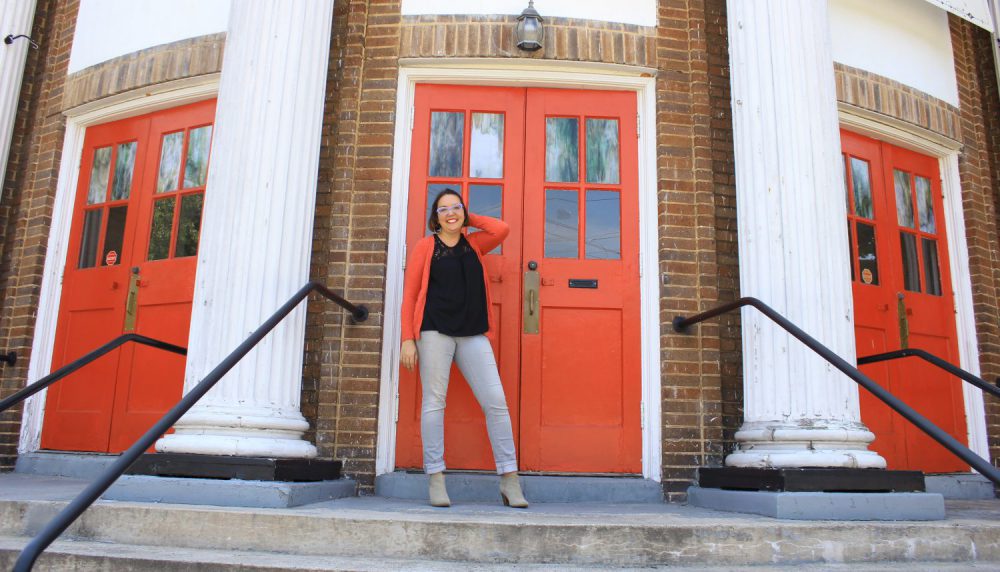
Where Do We Draw the Lines?

I was completely flattered when D.L. Mayfield invited me to write something about downward mobility and education. That lasted about five minutes, after that I was nervous and a little manic as I tried to sort out all the thoughts I have about this particular subject.

It turns out I have a roughly 37 million separate thoughts about education that can tumble out in a jumble, tangled mess any time I open my mouth. Just ask my husband’s colleagues who came over for sangria a few days ago and were treated to about half a million of these thoughts when they politely asked how my writing was going. Thanks guys!

It is hard to talk about something that I am sure I don’t have the answers to. If 6 years in the classroom didn’t, parenting has surely taught me that theoretical solutions and what actually happens are often not at all the same. But I can’t help but dream of a day when the christian families in communities all over the country decide to invest in their neighborhood schools. I can’t help dream of a time when public school teachers who don’t love Jesus, surely praise the church who loves their students so well. I think the church could be the answer to public education, if we would just love it well. I don’t know how we could get there, but I do know that the thought of it brings me to tears.

So, without further ado, here is my heart:

Last year in Atlanta, the most prestigious middle school needed to be redistricted. It was overflowing with kids while the next closest school was half empty. One of the largest neighborhoods, which pushed the school to overflowing, was actually closer to the half-empty school. It was a no brainer –except it wasn’t. The overflowing neighborhood was also one of the most affluent. Many of the parents had moved into that neighborhood before their thirteen and fourteen year olds were even born because it was districted for the prestigious middle school. Those lines would not be redrawn without a fight.

You can read the rest here.

Stories and the Knife Safety Circle

I spent 14 summers in a row spending a week at Girl Scout Day Camp. From about 3 until the summer I was 17. I started as a tweeny. Too little to be in the brownie group while my mom led a group for one of my sisters. They made me take a nap. I still resent it. I got a tick when I was 5 and the camp nurse had me pick the color of nail polish used to kill it, and popped that perfect specimen in a jar. My last year they were still using it as the visual aid to help leaders spot tics while checking hair after hikes.

By the time I got around to program-assisting I was an expert in all things day camp. Lighting fires with candle-kisses? I got that. You haven’t lived until you have taught 15 first grade girls sporting long pony tails how to properly handle fire (don’t forget your full water bucket with the wet stick poked in). You don’t know an exciting summer adventure unless you have supervised second graders as they chop vegetables for the kabob they probably won’t eat anyway.

Before you hand those young girls the pairing knife, you make them earn their knife safety cards. Before you pull out your blade you hold the knife with the blade tucked away, your arm fully extended you turn a slow circle. If you don’t hit anybody, proceed. You make them practice with cardboard cut-outs of switch blades, red lipstick smudged on the edge. A red mark is left wherever the fake blade is touched. Whoops, remember, we don’t handle the blade. Don’t hit anyone with that. You could make someone bleed. Those things are sharp.

Sometimes I wonder if our stories aren’t like those knives. We have to use them. They prepare our food; they save our lives. But be careful with those stories, those things are sharp. You could hurt somebody with those.

I wonder if we shouldn’t have to pass some sort of story-safety course before we hit the internet. I see so many stories flying through the air, ones I know are hurting people, ones I know are cutting too close. I want to be careful with my stories. I don’t want to make anyone bleed.

I have started telling the stories I stopped telling. I am one chapter shy of having a very rough first draft of the book I began telling people I was writing 6 years ago. The last two Tuesdays I have posted bits and pieces right here and have gotten a heartening response. But I get nervous everytime I hit that publish button. Am I representing my students well? Is there someone I didn’t see in my knife safety circle? Was the circle safe when I started, but someone walked in unknowingly. I’m scared of making someone bleed.

At the same time I want these stories to cut deep. If I didn’t believe in them I wouldn’t spend my summer putting them down and getting rejected five agents at a time. Like a surgeons stroke, I need them to be precise and sure. I am hoping these stories give new life to a system that is very, very ill. I suppose I know that there is a chance that my stories bleed out on the table. I don’t want to knick any arteries. I don’t want to make it worse.

I am longing for a knife safety circle for my stories. I am trying to make sure I don’t hurt anyone.

What They Don’t Teach in Teacher School: How to Take Attendance

As I work on my manuscript I thought y’all might like a sneak peek. My book is at least partially about how the lessons I learned in teacher school were completely un-useful my first year of teaching. Check back next Tuesday for another lesson I learned the hard way, or look at the list compiled in the tab up top.

How to Take Attendance

Attendance was my first problem. People who are surviving day to day in the midst of poverty do not have the time to come pre-register their kids at school. The kids  switch schools from year to year. The numbers and faces of high poverty schools fluctuate constantly. I got my attendance lists the day school began, and somehow “how to pronounce non-white names” was not something it had ever occurred to me to learn.

All cultures have different rules about names and how to go about saying them. This was no exception. I don’t mean to mock any of my students beautiful and carefully selected names. I mean to only mock my own ignorance of the system that was so evident to everyone else in the room.

But there I was, at the front of the room butchering almost every name that came across my lips. Demon has the emphasis on the second syllable as does Terrell and Darrell. C-i-a is pronounced sha in Laquicia, Tamecia, and Quanicia. Also, all three of those middle vowel sounds are a long e. My nasal short a was hilarious to students as that sound comes straight out of my nose.

I only looked more inept when I assumed a boy was a girl based on the name (apparently, Diamond is like Jordan, acceptable for either gender.) Being unable to put names to faces because I could not yet distinguish boy names from girl names was winning me no friends. 15-year-old boys are not amused when you say their name followed by “can she raise her hand?” Especially when he has his hand raised right in front of you.

Every class period I had about three kids who needed to be added to the list. Every class period they would tell me their name as though I would be able to spell it by sounding it out. After about seven painful attempts I learned to let the kids write their own names on my list.

It didn’t even occur to me until about six names into first period that I was in over my head. My first period knew before I got to the second name.

The kids wanted me to call them by their street names. It seems many of the kids had what they referred to as their “government names” the ones that I was bumbling through as I took role, and then they had the names that everyone actually called them (I suppose when your name is Austintavious you sort of need a shorter handle). Now, I know that this is an honor. If the kids want you to call them what their mother calls them, it means that you matter to them. They want you to really know who they are.

All I knew then was that this street name thing might get me fired. Imani broached this subject with me first. “Ms. Norman, nobody calls me Imani. Can’t you just call me Juicy?” I swallowed. Hard. I tried to say it casually. “You want me to call you Juicy?” “Yeah everybody does.” “So, if I called your mom to talk about you…she would say ‘how is Juicy doing in your class?’” She looked at me like I was a complete idiot. “I don’t think that is a good idea. I think I’ll just call you Imani.” She rolled her eyes and sighed.

Two kids later it was Malik’s turn. “Ms. Norman, nobody calls me Malik” “Well then, what should I call you?” “Pappy” I am quite sure my already overly expressive sometimes buggy eyes became even more cartoon like. I literally choked and croaked out “You want your white teacher to call you Pappy?” “Yeah, call me Pappy.” At this point I pictured the principal walking by as I called “hey Pappy, can you get that book for me?”

“Sorry Malik, I have bills to pay, I can’t afford to lose this job.”  The plus side of these sorts of exchanges was they brought me closer to the bell ringing. That term “Saved by the Bell,” I hadn’t realized they were talking about the teacher.

Jesus At the Blackboard: You can only do your best

This is a post in a series, Jesus At the Blackboard, a place to come and share our stories about educational choices in order to broaden the conversation without making parents feel bad about themselves. You can find all of the posts in this series here.

Sarah McCarten and I met through the e-course I can’t stop talking about. She is thinks deeply and I am grateful for this sharp and articulate piece.

You can only do your best.

I’m pretty sure the Gnostics are wrong and that Jesus and Mary Magdalene didn’t have children.* If they did though, I’m convinced they wouldn’t have sent them to a Christian School. In a where would Jesus school, I’m pretty sure an independent Christians school would score pretty low, but that’s exactly where my parents sent me.

I went to a run of the mill primary school, I wasn’t at the top of the class but I certainly wasn’t at the bottom. In those days, in my town, we had middle schools too, so at the age of 9 I went to my local middle school. At the end of my first term there I got a glowing report, things were going well. However, by the end of the year, the report wasn’t so good. I wasn’t the worst in the class, by any means, but I wasn’t where I should have been. My parents were so cross, not with me, but with my teacher, how could she have let them believe I was doing well, when in fact the truth was far from that. They’d lost their faith in our school system.

During that first year at middle school plans were emerging in our city for a Christian school to be opened. We’d heard about it, but thought it would be too expensive, and anyway my mother doesn’t drive so how would they get me there. More than that I’d been doing aright in normal school. Since the bad report though, they’d been reconsidering, They worked out that they’d be able to afford it, and that a lady my mum knew would be able to give me a lift there. Amazing. I remember the headmaster coming to our house for the interview, and leaving us with the uniform order form and an offer of a place.

In the first few years there it was great, really great. I did so much better than I would have in a state school, after a half a term or so my parents also decided to enrol my sister, and because the school was so small, even though we were 3 school years apart, we were in the same class. My sister is much cleverer than I am so she was able to help me with homework and stuff. It was also in the first year there that they discovered that I’m dyslexic and so were able to help my parents put measures in place to deal with that. For that I will always be grateful.

I could write, and have, about the things that made the school bad, I could tell you about how always being bottom of the class (I was in a class of 6 for my GCSEs) made me insecure, about how the fact that the uniform faith that the people there seemed to possess made me feel like I didn’t know Jesus. But I won’t because that’s not what this is about. It’s about honouring my parents for the choices they made and the sacrifices they went through.

I guess what I’d want to say to you, is do your best, you won’t get it right, but your kids will thank you for trying your best.

As a child, I was so inquisitive, I wanted to know, why, how and when. My school often wasn’t the place to ask those questions. Home was. I learned so much from the people in my family, especially my grandparents. Sometimes, I’ll be thinking about something, and I’ll wonder how do I know that, often it’s because one or other of my grandparents told me. It’s astonishing really.

I remember sitting in a maths lesson, we were studying trigonometry, I remember asking my teacher, why the heck we needed to know this, what purpose it would serve in life. He listed a host of jobs that might need this skill; have I ever used it? I think you know the answer. The things I learned from my family though, they’ll last a lifetime, the love of books, how to explain the bible, patience.

Even though I feel like I went to school for a long time, I found the days so long and I spend many of my waking hours there, I loved sleep then as much as I do now. I learned the thing I remember now, in places other than school.

* Of course they’re wrong, there is not a shred of biblical evidence for this; but humour me for a moment would you?


sarah mccarten

Sarah McCarten is a 30-year-old blogger/nanny. She’s from Yorkshire, but resides in Richmond in South West London, although you’ll often find her pottering around Watford. She loves Jesus, is passionate about theology, and she thinks she might want to be a vicar one day. She loves to write, sew, read, and cook. She’s not as funny as she thinks she is. She pretty much has the best friends in the world.


She blogs here and tweets here.


Hotdogs, Baseball, and Holy Communion

Aside

I pop in my contacts and smear on some red lipstick. It matches the skirt that I am wearing, the colors of the home-team navy, white, and lipstick red. Baby’s first Braves game for both of my girls, a milestone that means something in this hometown we have chosen for them. Gaah, I love this city.

When I remove my glasses to put in my contacts so that I can wear my new shades to the game, I become aware of just how tired my eyes are. I am writing a book this summer, and my computer sits on the kitchen counter perpetually opened. I steal sentences and shove them into my manuscript as my girls play in the kiddie pool or I marinate the meat that is going to go on the grill. Writing a book also means procrastinating the writing of  a book, and my twitter feed shows I have already become an expert at that.

It is a strange thing, online community. I have found real and true community on line, lead by a woman who shows us how to bring all of our pieces with us. To give our lives as offerings, holy and broken. But I have also found my own selfish tendencies, to unite with those who think most like me and declare all others unworthy of my time.

Before I found community online I found it at my church, spending weekends crashing on my pastor’s couch. My husband was out of town and they let me bring my dog. I tagged along to the grocery store, became a bonus soccer mom and both our butts went numb as we cheered for their son. Somehow our different views on the female role in the church never came up.

Our church has gotten bigger since then. There are more people  in the pulpit rotation and I sometimes wonder if this surrogate family of mine will grow into a shape that excludes me. I notice elder appointments (still no women) and phrases in sermons preached by men whose views make me nervous some days. I dissect re-tweets and question motives  and worry that one day there will be no room for me. It isn’t an easy thing, being a feminist at a Baptist church. It isn’t easy, bringing your entire self to be loved.

I confess too often my heart is encased in fear. Will there come a day that I am unwelcome, if others aren’t welcome could that protect me?

But today we aren’t gathered to hear the word of the Lord. we are gathered around a grill lit by a blow torch, eating hotdogs and sharing mustard. Summer Life is what our church calls it, the events from June through August where we get together simply so that we can be together.

One of the other moms mentions a recent facebook status of mine. how it ministered to her. We may disagree on the finer points of gender identity formation, but there is so much grace in knowing that another parent has two kids with a licking problem. (Seriously, what is up with that?)

At the kids space in the ballpark I wrangle with women who are in the same phase as me, or just beyond it only my oldest is the age of their youngest. There is so much they have to teach me. They have wisdom and grace and they pour it into me until it is surely running out of my pores. They have no idea how affirming this is. They think we are just swapping stories, sticking one more straw into the seven dollar coke. It seemed so important, when I was not sharing hotdogs, mustard, and stories of our children putting their tongues where they do not belong (No. Really. What is with that?), these differences of ours. It seemed so important that we are on opposite sides of so many theological arguments.

But when I am standing with them, eating with them, listening to the wisdom they have garnered going before me on this path of motherhood, we are simply sisters in Christ. We are just doing life together, loving our kids and Christ the best we know how. We all are rooting for the home team after all. There was no bread or wine, only hotdogs and overpriced coke. But there was communion, and it was holy. I came home fed.

Today I am linking up with Imperfect Prose.


What They Don’t Teach in Teacher School: How to talk about your butt

As I work on my manuscript I thought y’all might like a sneak peek. My book is at least partially about how the lessons I learned in teacher school were completely un-useful my first year of teaching. Check back next Tuesday for another lesson I learned the hard way.

How to talk about your butt

Da-a-a-amn, Miss Norman ain’t got no a-a-a-ss! The cry came from the back corner of the room. A thought that escaped out a of a surprised mouth the second I turned my back to the class to write on the white board with a green expo marker.

It was only the third day of school, but I recognized the voice as belonging to Neko. I stood at the board in the dress that I had so carefully selected for the first week of school. A brown wrap dress with three-quarter length sleeves, I loved the way this dress looked; just pretty enough to make me feel good, still distinctly professional. I pretended to continue writing until the blush running up my cheeks subsided and I could face the class as though I had not heard the exclamation from the back of the room.

Neko didn’t mean anything by it; he had simply never seen a woman with a backside as flat as mine. While inappropriate, the statement was accurate. Ms. Norman ain’t got no ass. It may have been the most obvious issue, but this was the least of my problems.

This was not the last time my butt would come up. I tried to follow the instructions of my teaching professors, ignore the comments and re-direct the conversation, but the students didn’t seem to understand that the shape of my backside was something I was unwilling to discuss. Now I know, I know it is because they liked me, they respected me, they were trying to protect me. Kids were talking about my flat-for-even-a-white-girl booty behind said butt and they were trying to let me know.

I abandoned the ignore-it technique mid-way through first semester when the girls in my fifth period attempted to stage an intervention. They wanted to make sure I knew about my problem and they wanted to help.

The girls approached my desk with solemn faces, “Ms. Norman, do you know what Apple Bottom jeans are?” I started laughing, that song had been playing non-stop in the hallways for the entire year Apple-bottom jeans and the boots-with-the-fur. Of course I knew what apple bottom jeans were, and I knew that they were designed to do just what they advertised, make your back-side look like a luscious red apple.

I explained to the girls, as gently as possible, that while I appreciated their help, and offer to buy me a pair of pants, this is just what white-girl butt looks like. My butt is just flat, and that is okay. They left my room with their heads shaking. How could I live my whole life-like that?

I learned that year to attack the discussions head-on, to ignore the blush as it crept up my cheeks. The kids were going to talk about whatever it was they were talking about. They may as well have accurate information.